
DEVCLASS AD
DEVELOPMENT
JetBrains launches AI agent IDE built on the corpse of abandoned Fleet
JetBrains has previewed Air, a tool for agentic AI development which it describes as a new wave of dev tooling.
Head of product Nik Tkachev said that JetBrains believes agents are changing how software is made, and that Air is designed to delegate tasks to multiple AI agents running concurrently.
DEVCLASS AD
Air is now in public preview, though the download page shows that only the macOS version is available, with Windows and Linux promised later. Air supports OpenAI Codex, Anthropic Claude Agent, Google Gemini CLI, and JetBrains Junie. It can use the Agent Client Protocol (ACP), which Zed and JetBrains sponsor, as a vendor-neutral protocol for agent-editor communication, meaning any compliant agent can use it in future.
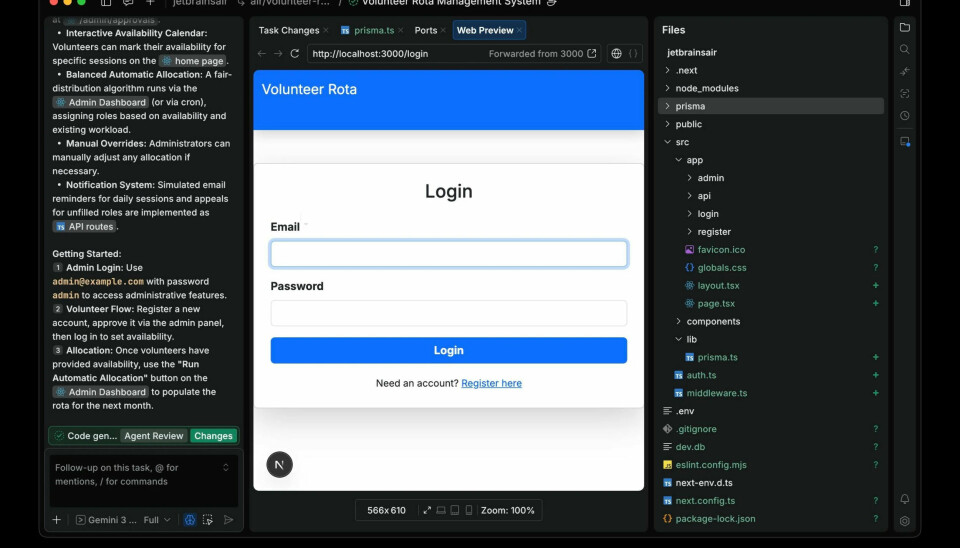
The key element in Air is a task, which is described by the user and run by an agent either directly in a local workspace, in a Git worktree, Docker, or (in a future release) a cloud container. A code editor is included. Users can switch between tasks, and review and approve output.
JetBrains has also released Junie CLI (command line interface), which the company said makes its AI agent "fully standalone." Previously, Junie could only be used as an IDE extension. Junie AI tokens can be purchased from JetBrains or users can bring their own key to use an existing subscription, with support for models from OpenAI, Anthropic, Google and Grok. Junie CLI supports macOS, Linux and Windows.
DEVCLASS AD
Junie costs from $10.00 per month for individuals to $60 per month for enterprise licenses.
Developers have asked for the ability to use local models such as Ollama or Qwen. JetBrains said that "for now we don't have ETA, but this is an active topic in our planning."
Air is not quite as new as Tkachev implies in his introductory post. The base IDE is the otherwise abandoned Fleet, which was first conceived as a new developer environment to run alongside and perhaps eventually replace the longstanding IntelliJ IDEA, but which never made it out of preview. The wide range of existing JetBrains IDEs are built on IntelliJ IDEA, a traditional IDE first released for Java in 2001.
The rise of AI-assisted and now agentic coding has had a dramatic impact on the IDE market.
"New concepts are emerging faster than anyone can validate them," said Tkachev. JetBrains IDEs are popular with developers, but the market is increasingly fragmented with model providers like Anthropic coming up with their own tools and less consensus about what an ideal development environment looks like when AI is doing more of the coding.
JetBrains Air is an attempt to keep up though the company will have a difficult time balancing the needs of its loyal IntelliJ IDEA customers, who do not want to move to a different product, while also trying to establish a new AI-centric development environment.


